How Tree Pruning & Crown Shaping Can Reduce Risk
Trees add shade, privacy, habitat, and real visual weight to a property. They also change over time, often in ways that are easy to miss until a branch fails, a storm exposes weak structure, or a limb starts rubbing a roofline. That is where thoughtful Tree Pruning & Crown Shaping matters. Done well, it is not cosmetic trimming for its own sake. It is a practical risk-reduction tool that helps a tree stand up better to wind, reduces the chance of branch failure, improves clearance, and addresses structural problems before they become emergencies.
The key word is thoughtful. Pruning can reduce risk, but poor pruning can create more of it. There is a wide gap between selective cuts made with a clear objective and indiscriminate cutting that leaves stubs, removes too much live growth, or strips out the crown in a way the tree cannot handle well. Large-tree work is inherently dangerous, and the stakes are higher when people, vehicles, buildings, service lines, or high-use outdoor spaces sit within reach of a failing limb. That is why experienced crews and a Certified Arborist Consultation are often the difference between a useful intervention and an expensive mistake.
Risk in trees is real, but it is not all-or-nothing
One of the most important ideas in arboriculture is that no tree is completely risk-free. A healthy mature tree can still lose a branch. A tree with defects may still be worth preserving if the risk can be reduced to a level the owner accepts. Good decision-making lives in that middle ground.
A proper risk discussion is not just about whether a tree looks nice or looks scary. It is about targets and consequences. A heavy lateral limb over a driveway where people pass every day presents a different level of concern than the same limb over a fenced side yard that no one uses. A split union high in the crown matters more if prevailing winds push the canopy toward a house. This is why Dangerous Tree Assessment and Removal is not a one-size-fits-all service. Sometimes removal is justified. Often, targeted pruning, crown reduction, or Tree Cable and Bracing can lower the likelihood of failure without taking the tree down.
In practice, risk reduction usually starts with a systematic look at the tree’s structure and site. The arborist considers visible defects, deadwood, branch attachments, crown balance, recent storm damage, interference with structures, and how the space below the tree is used. From there, the recommendation may be simple or surprisingly nuanced. Not every defect requires aggressive action, and not every attractive tree is structurally sound.
What pruning is really doing when it reduces risk
Homeowners often think of pruning as “cutting back branches,” but that description is too blunt to be useful. Risk-oriented pruning is about changing load, improving structure, and removing specific problems.
If a limb is overextended and heavily weighted at the tip, selective reduction cuts can shorten that lever arm and decrease stress at the attachment point. If a crown has dead, cracked, or broken branches, removing those parts can directly lower the chance of falling debris. If two limbs are competing or rubbing, pruning can create separation and prevent wounds from getting worse. If a tree has developed a dense, uneven canopy on one side, shaping can improve balance and reduce wind loading in practical terms, even if it does not make the tree “storm-proof.”
This is also where terminology matters. “Crown shaping” sounds decorative, but in professional tree care it often refers to making structural improvements while keeping the tree’s natural form. The goal is not to turn every tree into a symmetrical object. Different species grow differently, and mature trees should not be forced into artificial outlines. Good shaping respects the species, the age of the tree, and the specific defects being addressed.
The most common hazards pruning can address
A well-planned pruning program often targets a handful of recurring risk issues. These are the concerns property owners tend to notice first, and they are also the issues that can escalate when they are ignored:
- Dead or broken branches that could fall without much warning
- Overextended limbs with too much weight at the ends
- Branches rubbing each other, creating wounds and weak points
- Low limbs or encroaching branches over roofs, driveways, and walkways
- Crowns with poor structure, including competing leaders or weak attachments
Those points may sound simple, but the judgment behind them is not. Deadwood in the outer canopy can be a routine maintenance item in one tree and a sign of broader decline in another. A long lateral branch may be acceptable if it is well attached and lightly loaded, yet a shorter branch with included bark or an existing crack may deserve immediate attention. The details decide the work.
Crown reduction is not topping
This distinction is worth making clearly because it is one of the most misunderstood parts of tree care. Proper crown reduction uses selective cuts back to appropriate lateral branches. The idea is to reduce height or spread while preserving the tree’s structure and biology as much as possible. Topping is something else entirely. It removes large portions of the crown indiscriminately and often leaves stubs. That kind of work can lead to weak regrowth, poor structure, and long-term problems that outweigh any short-term size reduction.
On real properties, this confusion shows up often. A homeowner sees a tall tree leaning over the roof and asks for it to be “cut down a bit.” If the response is to flatten the crown, the tree may become more hazardous over time, not less. If the response is a measured reduction focused on overextended leaders, end weight, and branch spacing, the result is usually safer and more defensible.
There are cases where reduction is the right call and cases where it is not enough. A tree with extensive structural defects or one that cannot be reduced without severe damage may belong in the Tree Removal Services category instead. The point is not to preserve every tree at any cost. It is to match the intervention to the condition of the tree and the level of risk.
Clearance work is about more than convenience
Some of the highest-value pruning jobs are not dramatic at all. They involve keeping limbs off roofs, away from windows, clear of access routes, and separated from parts of the property where branch failure would have immediate consequences. These jobs can prevent a small issue from becoming an insurance claim.
A branch repeatedly touching a roof does more than make noise in wind. Over time it can damage shingles, wear through protective surfaces, and create a direct pathway for pests or moisture problems. Limbs over a driveway can be a nuisance until a snow load or summer storm turns them into a hazard. Branches obscuring sightlines at an entrance create a different kind of risk, one tied to visibility rather than failure. Pruning for clearance reduces exposure in ordinary daily use, not just during severe weather.
This is also where timing matters. Owners often call only after the first branch drops or after a limb scrapes the house during a storm. By then, the work tends to shift toward Emergency Tree Services, which are necessary but more stressful and less flexible. Preventive pruning is calmer, more selective, and usually kinder to the tree.
Storm preparation starts long before the forecast
The trees that fail in storms are not always the largest or oldest. They are often the ones with unaddressed structural issues that became obvious only after the wind started moving the canopy hard. A codominant stem with a weak union, a long lateral branch carrying too much end weight, or a crown full of deadwood can hold for years, then come apart in one ugly night.
That is why risk-reducing pruning is closely connected to storm resilience. It does not guarantee a tree will withstand every weather event, because no arborist can promise that. What it can do is address predictable weak points. It can remove failed hangers before they fall on their own. It can reduce stress on suspect attachments. It can improve spacing and form in ways that make the crown behave more predictably.
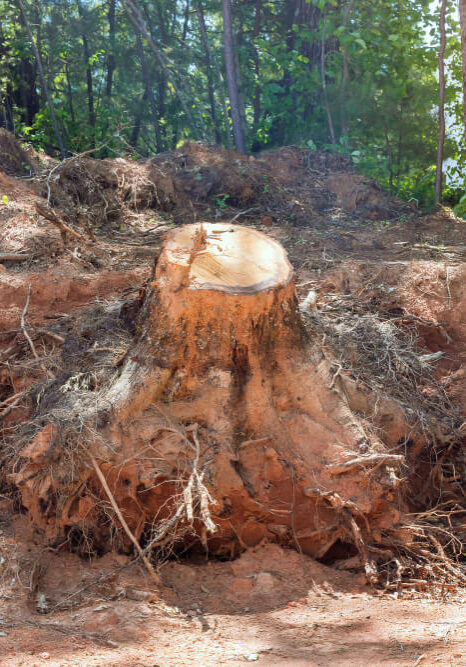
In wooded neighborhoods, there is another layer. Once a tree or branch fails, cleanup can reveal stumps, root plates, or unstable remnants that still need attention. That is where Stump Removal & Grinding sometimes enters the picture, not as a first-line risk reduction tool, but as part of restoring the site after a necessary removal. If the original tree had to come down because pruning could not reduce risk enough, completing the job properly matters for safety, access, and future landscaping.
When pruning is enough, and when it is not
One of the harder conversations in tree care happens when a property owner wants pruning to solve a problem that pruning cannot solve. Selective cuts can reduce loading, local emergency arborist improve structure, and remove defects. They cannot reverse every weakness. If a tree has severe structural failure, extensive dead canopy, or defects that leave little sound structure to work with, pruning may only postpone an outcome that is already moving in one direction.
That does not mean pruning failed. It means the tree reached a point where the better risk-management choice is removal. Skilled arborists make that distinction all the time. A tree with one overextended limb over a patio may benefit from pruning and monitoring. A tree with major structural defects over a house may fall into Dangerous Tree Assessment and Removal territory. The difference is not sentiment. It is the condition of the tree, the target below it, and whether a reasonable intervention can lower risk enough.
This is why a Certified Arborist Consultation adds value early. The arborist is trained in the art and science of tree care, and that training shows up in judgment. A good consultation does not default to removal, and it does not preserve a hazardous tree just because it is mature. It weighs the options.
Structural support can complement pruning
There are situations where pruning alone is not the full answer. A tree with valuable form and a known structural issue may benefit from Tree Cable and Bracing along with selective pruning. The support system does not make the tree invincible, but it can be part of a broader strategy to reduce movement or support weak unions while preserving canopy where appropriate.
The important point is that support systems are not substitutes for sound pruning. If the crown remains overloaded, if deadwood is ignored, or if poor branch architecture is left untouched, hardware by itself will not address the underlying problem. In the field, the best results usually come from combining methods thoughtfully. Reduce end weight where it matters, remove defective material, and provide support where the structure justifies it.
This kind of work demands experience. Installation decisions should not be improvised, and large-tree operations are dangerous enough without guesswork. When people hire trained professionals for this level of care, they are paying for judgment as much as labor.
Fire risk changes the pruning conversation
In fire-prone regions, the same principles of pruning and crown shaping take on an additional purpose. FireSmart Tree Services are not just about making a property look tidy. They are about managing fuels, spacing vegetation appropriately, and reducing pathways that let fire move from ground level into the canopy or from vegetation to structures.
That said, “more cutting” is not automatically better. Over-thinning or improper pruning can create stress, encourage poor regrowth, or expose trees in ways that do not help long-term health. Fire-focused work still needs restraint. The objective is to reduce hazard while preserving as much stability and value as possible. Practical clearance from roofs, eaves, and other vulnerable parts of a structure often matters a great deal, and crown shaping can be part of that effort when handled carefully.
This is another area where owners benefit from a site-specific evaluation. A hillside lot with dense vegetation raises different concerns than a flat urban yard with a few ornamental trees. Fire exposure, prevailing wind, and proximity to structures all shape the recommendation.
What a professional consultation should clarify
A useful arborist visit should leave the owner with a clear sense of priorities, not vague warnings. In most cases, the conversation should answer a few core questions:
- What specific defects or exposures are present right now
- Whether pruning can reduce risk meaningfully, or whether removal is the better option
- Whether structural support such as Tree Cable and Bracing should be considered
- How urgent the work is, especially if storms or occupancy patterns increase exposure
- What follow-up maintenance or monitoring may still be needed later
That clarity matters because tree care decisions often involve trade-offs. Reducing a crown may lower load on a weak attachment, but it also changes the form of the tree. Preserving a mature tree may require periodic maintenance rather than a one-time fix. Removal eliminates risk from that tree, but it also removes shade, screening, and habitat. Owners deserve recommendations that acknowledge those trade-offs plainly.
The cost of waiting is often hidden at first
Risk-related tree problems rarely announce themselves neatly. More often, they show up as small signs that are easy to dismiss. A limb starts sagging. A branch union opens slightly. Storm cleanup reveals old broken wood still hanging in the upper crown. These details tend to become urgent only after weather or gravity forces the issue.
By that stage, the work is often more complicated. Emergency access may be limited. A failed branch may have damaged a fence or roof. The crew may need to shift from preventive pruning to controlled removals and site stabilization. If the tree must come down, the job can expand into Tree Removal Services and post-removal Stump Removal & Grinding. All of that is still manageable, but it is rarely the outcome owners hoped for when the first warning signs appeared.
Preventive pruning does not have the drama of an emergency response, yet it is often the service that saves the most trouble. It buys time, reduces known weak points, and makes the tree more manageable in the face of ordinary weather and ordinary use of the property.
Why DIY work is where risk often multiplies
There is a reason the industry and professional organizations stress that pruning or removing large trees is dangerous work. The obvious hazards are falling limbs, chainsaws, ladders, and rigging. The less obvious hazard is misjudgment. People remove the wrong branch, cut too much at once, or create new defects with poor cuts. A branch that looked small from the ground turns out to be heavily loaded and hard to control. A cut made in the wrong place leaves a stub or damages the branch collar. A “quick trim” changes the crown in ways that invite weak regrowth later.
Even when the property owner avoids injury, the tree can pay the price for years. This is especially true with mature specimens or trees near homes, roads, and high-use outdoor areas. Professional crews bring more than tools. They bring training, work positioning skills, controlled lowering methods, and the discipline to stop when pruning is no longer the right answer.
Good pruning leaves a tree looking natural
Some of the best risk-reduction work is easy to overlook because the tree still looks like itself when the crew is done. The crown may be slightly lighter, clearer, and more balanced. A risky branch may be gone, and a weak leader may be shortened or subordinated. Clearance may be improved over a roof or drive. Yet the result should not look butchered.
That natural finish is one sign of competent work. Another is that each cut seems to have a reason. Random interior stripping, blunt heading cuts, and harsh crown loss usually indicate the opposite. Homeowners do not need to memorize pruning terminology to notice the difference. They can ask a simple question: what is each major cut intended to accomplish? A professional should be able to answer in plain language.
Risk reduction is a long game
Trees are living structures, not fixed installations. They grow, respond, and age. A pruning decision that is appropriate today may need to be revisited later as the crown fills in, as new defects appear, or as the site changes. A backyard play area, a new patio, or an expanded parking area can raise the consequence of a branch failure even if the tree itself has not changed much.
That is why the best tree care plans are rarely framed as one-and-done. They are based on current conditions and adjusted over time. Some trees need only occasional maintenance. Others, especially large mature specimens near important targets, benefit from periodic reassessment. If a storm exposes new damage, the tree may move temporarily into the Emergency Tree Services category. If a structural issue progresses, support systems or removal may need another look.
The broader point is reassuring, not alarming. Many risks can be reduced substantially with measured, professional intervention. Trees do not have to be either ignored or removed. Between those extremes lies the careful work of pruning, shaping, evaluating, and, when needed, supporting the structure so that the tree remains an asset rather than becoming a liability.
When owners approach Tree Pruning & Crown Shaping as part of overall risk management, they tend to make better decisions. They notice problems earlier. They understand why a natural-looking selective prune can do more good than a harsh cutback. They see how pruning fits alongside Certified Arborist Consultation, Tree Cable and Bracing, FireSmart Tree Services, and, when necessary, Dangerous Tree Assessment and Removal. Most importantly, they treat the tree as something worth managing with care, because the safest tree program is rarely the most aggressive one. It is the most informed one.
Name: Ace Tree Services Ltd.
Address: 4656 Wallace Hill Road, Kelowna, BC
Phone: 250-212-9593
Website: https://acetree.ca/
Hours:
Monday: 7:00 AM–5:00 PM
Tuesday: 7:00 AM–5:00 PM
Wednesday: 7:00 AM–5:00 PM
Thursday: 7:00 AM–5:00 PM
Friday: 7:00 AM–5:00 PM
Saturday: 7:00 AM–5:00 PM
Sunday: Closed
Emergency tree services: 24/7 emergency service is listed.
Open-location code / Plus code: RHF8+8G Kelowna, British Columbia, Canada
Map/listing URL: https://www.google.com/maps/place/Ace+Tree+Services+Ltd./@49.8232606,-119.4337283,563m/data=!3m1!1e3!4m6!3m5!1s0x537d8b1d074815c5:0x450b88afa7a41435!8m2!3d49.8232606!4d-119.4337283!16s%2Fg%2F11ydkpnh22
Embed iframe:
Socials: https://www.facebook.com/people/Ace-Tree-Services/61585901931447/
https://m.yelp.com/biz/ace-tree-services-kelowna
Ace Tree Services Ltd. provides professional tree service for residential, commercial, and municipal customers in Kelowna and across the Okanagan Valley.
The company’s listed services include tree removal, stump removal and grinding, tree pruning and crown shaping, emergency tree services, certified arborist consultation, dangerous tree assessment, tree cable and bracing, and wildfire mitigation.
Ace Tree Services works with homeowners, businesses, property managers, and public-sector clients that need safe, practical tree care in the Kelowna area.
The official site highlights ISA-certified arborists, insurance, and experience handling both routine and complex tree service situations.
Customers can contact Ace Tree Services for tree care planning, hazard concerns, emergency tree cleanup, pruning needs, stump grinding, or advice about trees near homes, fences, driveways, and landscaping.
Ace Tree Services lists regular work hours from 7:00 AM to 5:00 PM Monday through Friday, with 24/7 emergency tree service available for urgent situations.
For tree service in Kelowna, call 250-212-9593 or visit https://acetree.ca/
The public map listing places Ace Tree Services Ltd. in Kelowna and can help customers find directions to the Wallace Hill Road area.
Popular Questions About Ace Tree Services Ltd.
What services does Ace Tree Services Ltd. provide?
Ace Tree Services Ltd. provides tree removal, stump removal and grinding, tree pruning and crown shaping, emergency tree services, certified arborist consultation, dangerous tree assessment and removal, tree cable and bracing, and wildfire mitigation.
Where is Ace Tree Services Ltd. located?
The official website lists Ace Tree Services Ltd. at 4656 Wallace Hill Road, Kelowna, BC.
What areas does Ace Tree Services Ltd. serve?
The official website describes Ace Tree Services as located in Kelowna and servicing the Okanagan.
What phone number should customers call?
Customers can call Ace Tree Services Ltd. at 250-212-9593.
What are Ace Tree Services Ltd.’s regular hours?
The official website lists work hours as 7:00 AM to 5:00 PM, Monday through Friday. Saturday and Sunday regular hours are not listed and should be confirmed directly.
Does Ace Tree Services Ltd. offer emergency tree service?
Yes. The official website lists 24/7 emergency services for urgent tree situations, including emergency tree removal, dangerous tree assessment, stabilization, and limb or branch cleanup.
Does Ace Tree Services Ltd. have certified arborists?
Yes. The official website states that Ace Tree Services has ISA-certified arborists.
Can Ace Tree Services Ltd. help with wildfire mitigation?
Yes. Wildfire mitigation is listed as one of the company’s tree services.
How do I contact Ace Tree Services Ltd.?
Call 250-212-9593 or visit https://acetree.ca/.
Landmarks Near Kelowna, BC
Wallace Hill Road: A local Kelowna road near the address listed for Ace Tree Services Ltd.
Okanagan Lake: A major Kelowna landmark near residential, commercial, and waterfront properties that may need tree pruning, removal, or hazard assessment.
Downtown Kelowna: A central area with homes, offices, rental properties, restaurants, and commercial sites that may need professional tree care.
Mission / Lower Mission: A well-known Kelowna area with mature landscaping, residential properties, and lake-adjacent homes.
South East Kelowna: A rural and residential area with larger properties, orchards, and tree-care needs that can include pruning, removals, and wildfire mitigation.
Crawford: A residential area near the southeast side of Kelowna where homeowners may need tree trimming, hazard assessment, and stump grinding.
Kettle Valley: A hillside residential neighborhood where tree condition, slope, wind exposure, and defensible-space planning can matter for property owners.
Myra-Bellevue Provincial Park: A major outdoor landmark near southeast Kelowna and a useful point of orientation for nearby properties.
Gallagher’s Canyon: A residential and golf community near southeast Kelowna where tree maintenance and wildfire-conscious vegetation management can be practical concerns.
Orchard Park Shopping Centre: A major central Kelowna retail landmark and reference point for customers traveling across the city.
Highway 97: A major Kelowna corridor connecting neighborhoods, commercial properties, and service routes throughout the region.
Kelowna City Park: A recognizable central landmark near downtown neighborhoods and lakefront properties.
Glenmore: A Kelowna neighborhood with residential and commercial properties that may need pruning, storm cleanup, and general tree care.
Rutland: A large residential and commercial area where customers may need tree removal, pruning, stump grinding, or arborist consultation.
Black Mountain: A hillside community where slope, wind, wildfire exposure, and access can influence tree service planning.
For tree service near these Kelowna landmarks, contact Ace Tree Services Ltd. at 250-212-9593 or visit https://acetree.ca/